Online
Please share your contact details to begin your consultation with our AI assistant.
By starting a chat, you agree to our privacy policy and data processing terms.
506 articles covering UK law — immigration, corporate, property, technology, employment and more. Updated daily from Google News.
Showing 31–60 of 83 articles in Intellectual Property Law
Page 2 of 3

Discover the different types of intellectual property (IP) that arise from academic health research including patents, trademarks, copyright and trade secrets.

It marks the first time the U.K. has explicitly written drug patent rules into a free trade agreement.

In this article, the UK government’s March 2026 report on copyright and AI is described as a “pause and reset,” with no immediate reforms while tensions between creators and AI developers continue.

‘Workable” solutions that enable transparency over the content and data used to train AI models and allow rightsholders to opt their works out from being used for that purpose, have yet to be found, UK ministers have admitted, despite the government previously indicating a preference for those measures to be built into a package of AI-related reforms to UK copyright law.

Major jurisdictions are converging on some key IP issues affecting AI, but they diverge on others, and a great deal of uncertainty remains. While the application of IP law to AI evolves, IP strategies may need to be jurisdiction-specific.

No two people are alike, or so we thought. Recent advances in AI have made it possible to produce near-identical replicas of real people...

The UK’s GenAI copyright report confirms no immediate reform, with key issues such as transparency, licensing and deepfakes moving to further consultation.

The UK’s decision not to follow the EU’s AI copyright regime creates uncertainty for businesses while opening debate over whether the UK will prioritise innovation or protections for the creative industries.

Data centres are increasingly at the epicentre of technology growth, and intellectual property (IP) features prominently in the development of the next generation of data centres. The UK hosts roughly 500 data centres, a figure likely to grow with AI demand, increased processing power and greater storage needs. Accompanying this growth is an increased importance in the role of IP, as patentees seek to maximise value from, and protect, their innovation.

In this article we take a look at what to expect in 2026 in the area of AI and UK copyright, including key judgments, legislative proposals and other developments on the horizon.

As AI tools make digital impersonation easier, the Government’s proposed consultation on digital replica rights could reshape how identity is protected and commercialised in the UK.

No concrete policy decisions made; wide text and data mining copyright exception with opt-out no longer preferred approach; more information gathering to follow

<p style="margin: 0;"><strong>Detailed Analysis</strong></p> <p style="margin: 0;"> </p> <p style="margin: 0;">The EU Resolution and the UK Report address several overlapping themes at the intersection of copyright law and generative AI. The following comparative analysis highlights both convergences and significant divergences between the two approaches:</p> <p style="margin: 0;"> </p> <p style="margin: 0;"><strong>The Copyright Framework for AI Training—Divergent Philosophies</strong></p> <ul> <li>The EU Resolution considers that the current copyright legislation, including the <a href="https://eur-lex.europa.eu/eli/dir/2019/790/oj?eliuri=eli%3Adir%3A2019%3A790%3Aoj&locale=en">Directive (EU) 2019/790 of the European Parliament and of the Council of 17 April 2019 on copyright and related rights in the Digital Single Market and amending Directives 96/9/EC and 2001/29/EC</a> (the "CDSM Directive"), is insufficient to address the challenges of licensing copyrighted material for generative AI and calls on the Commission to urgently propose a supplementary legal framework (paragraphs 1 and 2 of the Resolution).</li> <li>The UK Report, by contrast, takes a more restrained stance. The UK Government rejected its own earlier preferred option of introducing a broad copyright exception with opt-out, following strong opposition from the creative industries. Instead, it proposes to gather further evidence on how copyright laws are impacting AI development, consider alternative targeted approaches, and monitor developments in litigation and international contexts before legislating. In short, the EU demands new rules now, while the UK prefers to wait and see.</li> </ul> <p style="margin: 0;"><strong>Transparency Obligations—Mandatory vs. Voluntary</strong></p> <ul> <li>The EU Resolution insists on full mandatory transparency and source documentation regarding the use of copyrighted works by providers and deployers of general-purpose AI models placed on the EU market, including detailed lists of each copyrighted work used for training, inference, retrieval-augmented generation ("RAG"), or fine-tuning (paragraphs 12 and 13 of the Resolution). It further requires crawlers to identify themselves and AI providers to maintain detailed records of their scraping activities, and establishes that mere information about third-party content used by AI providers does not constitute a trade secret under EU law.</li> <li>The UK Report, while recognizing strong stakeholder support for transparency (over 90% of consultation respondents favored disclosure), stops short of introducing mandatory requirements. Instead, the UK Report proposes to work with industry and experts to develop best practice on input transparency to help rights holders assert their rights, while continuing to monitor the effects of transparency rules in other countries, including the EU AI Act. The UK also explicitly proposes not to create any new regulator to oversee transparency compliance and not to impose regulatory duties on existing regulators at this time.</li> </ul> <p style="margin: 0;"><strong>Rights Holders' Control, Opt-Out and Licensing</strong></p> <ul> <li>The EU Resolution reaffirms that rights holders must have full control over the digital use of their content by AI systems for training purposes, supported by full transparency and an effective ability to exclude such use. It proposes that the EUIPO serve as a trusted intermediary to manage and catalogue opt-outs, and calls for voluntary sector-by-sector collective licensing agreements to create an operational licensing market with fair remuneration, firmly opposing any blanket licence in exchange for a flat-rate payment (paragraphs 5, 9, 10, 19, 20, and 21 of the EU Resolution).</li> <li>The UK Report, while sharing the principle that rights holders should be fairly remunerated, takes a markedly less interventionist stance. It proposes not to intervene in the licensing market at this stage, citing insufficient evidence to justify government intervention. The UK relies on the existing copyright framework and the emerging voluntary licensing market, noting encouraging trends in licensing deals globally. The UK also rejected the opt-out exception model (similar to the EU's Article 4 CDSM Directive approach), finding that both creative industries and AI developers had significant concerns about its practical implementation.</li> </ul> <p style="margin: 0;"><strong>Territorial Application and Models Trained Abroad</strong></p> <ul> <li>The EU Resolution affirms that EU copyright law should apply to all generative AI models and systems placed on the EU market, regardless of the jurisdiction in which training took place, and that non-compliant models should be prohibited from the EU market (paragraph 16 of the Resolution). This represents a strong extraterritorial assertion.</li> <li>The UK Report acknowledges the issue—recognizing that most frontier AI models are trained outside the UK, primarily in the USA—but proposes a significantly more cautious approach. It declines to amend copyright law in respect of systems developed outside the UK at this time, instead relying on the existing law as interpreted in the <em>Getty Images v Stability AI</em> judgment (where the primary copyright infringement claims relating to AI training were withdrawn at trial due to insufficient evidence that the relevant training activity had taken place in the UK; suggesting that AI training conducted overseas (as is usually the case in practice) would be unlikely to infringe UK copyright law). The UK proposes to keep this issue under review, engage bilaterally with other countries, and work through forums such as the World Intellectual Property Organization ("WIPO") to support closer international alignment.</li> </ul> <p style="margin: 0;"><strong>Enforcement and Presumptions</strong></p> <ul> <li>The EU Resolution recommends a rebuttable presumption that, for any generative AI model placed on the EU market, copyrighted works have been used for training when transparency obligations have not been fully complied with. When a rights holder prevails on this basis, all reasonable and proportionate costs should be borne by the AI provider (paragraph 24 of the Resolution). This represents a significant shift in the burden of proof in favor of rights holders.</li> <li>A notable national development in this area is the French Bill adopted by the Senate on 8 April 2026, which would insert a new Article L. 331-4-1 into the French Intellectual Property Code. Under this provision, in any civil proceedings, a work protected by copyright or related rights is presumed to have been used by an AI provider, provided that an indication relating to the development, deployment, or output of the AI system makes such use plausible. Unlike the EU Resolution's presumption—which is triggered by non-compliance with transparency obligations—the French presumption would apply more broadly, requiring only a plausible indication of use. The French Bill would also apply to proceedings pending at the date of its entry into force. This text remains subject to the parliamentary process and has not yet been finally adopted.</li> <li>The UK Report does not propose any equivalent presumption. Instead, it relies on the existing civil enforcement framework, which the UK Government considers to be generally effective and capable of adapting to AI-related challenges. The UK proposes further work to identify and address enforcement barriers, including considering the likely effects on SMEs and individual creators. It also notes the potential role of the <em>Getty Images v Stability AI </em>appeal in clarifying the law on secondary infringement for AI models trained abroad. Notably, the UK explicitly proposes that no new regulator should be created specifically to oversee AI-copyright matters.</li> </ul> <p style="margin: 0;"><strong>AI-Generated Content and Computer-Generated Works</strong></p> <ul> <li>The EU Resolution reaffirms that wholly AI-generated content that does not meet the established criteria for copyright protection should be ineligible for such protection, with its public domain status clearly determined (paragraph 25 of the Resolution). It also calls for clear labelling of exclusively AI-generated content and measures against deepfakes (paragraphs 27 and 28 of the Resolution).</li> <li>The UK Report reaches a remarkably similar conclusion on substance: it proposes to remove the UK's unique copyright protection for wholly computer-generated works ("CGWs"), which has existed since 1988, finding minimal evidence that it is being actively used or has material economic impact. However, the UK again diverges on approach: while the EU calls for mandatory labelling requirements, the UK proposes only to work with industry to explore best practice on labelling AI-generated content, continuing to monitor international developments rather than legislating.</li> </ul> <p style="margin: 0;"><strong>Digital Replicas and Deepfakes</strong></p> <ul> <li>The EU Resolution calls on the Commission to examine measures to protect individuals against AI-generated deepfakes imitating their personal characteristics without consent, and calls on digital service providers to act against such illegal use (paragraphs 27 and 28 of the Resolution).</li> <li>While the UK Government agrees that existing protections—a patchwork of IP, data protection, online safety, and criminal law—may not be sufficient, it stops short of proposing specific legislation. Instead, it proposes to explore a range of options, including the potential introduction of a new personality or image right, while considering the complex interplay between IP, privacy, and other areas of law. The government has stated that it will "launch a consultation in the summer to seek views on how we address these harms, while protecting legitimate innovation."</li> </ul> <p style="margin: 0;"><strong>Conclusion</strong></p> <p style="margin: 0;"> </p> <p dir="auto" style="margin: 0;">For stakeholders in the AI and creative industries, the practical takeaway is clear: the EU standard is likely to become the baseline for any company seeking access to the European market, while the UK's evolving position offers both flexibility and uncertainty. Meanwhile, national initiatives such as the French Bill demonstrate that EU Member States may not wait for EU-level legislation and could adopt their own rules on presumptions of use, further complicating the compliance landscape for AI providers. The coming months will be critical, as the EC responds to the Resolution with legislative proposals, the UK <em>Getty Images</em> appeal concludes (although a decision is not expected until 2027), and international discussions at WIPO and beyond continue to shape the global framework. Companies and creators should prepare for a world in which copyright compliance in the AI context is not a single standard but a multijurisdictional puzzle requiring careful, jurisdiction-specific strategies.</p>

UK lawmakers have called on the government to rule out writing a new text and data mining (TDM) exception to copyright, to support AI training and development, into UK law.

The Intellectual Property Office (IPO) is increasing fees for patents, trade marks and designs from 1 April 2026.
A suite of new digital services to apply for, manage or renew UK patents.
New resource to strengthen IP capability and support commercialisation across the UK research sector.
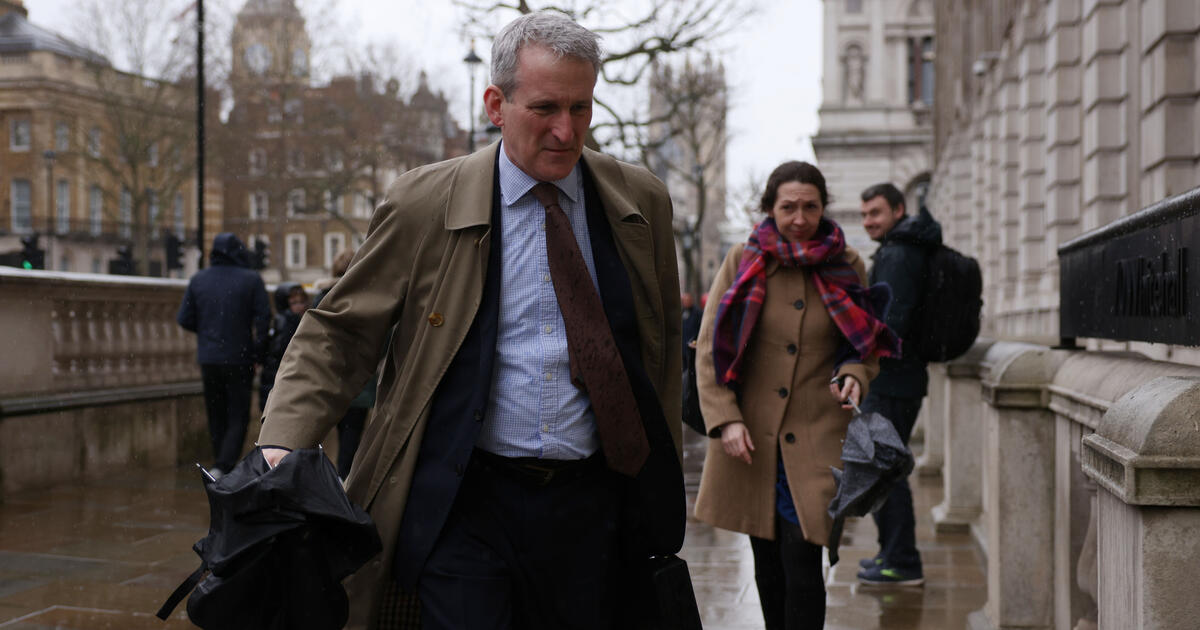
Online publishers would be given greater visibility over the scraping of their content by online bots under new legislative proposals put forward in the UK.

The European Patent Office Board of Appeal's decision in T 0137/24 examines whether increasing percentage sequence identity thresholds in patent claims constitutes added matter and whether such claims meet sufficiency requirements. This case highlights the divergent approaches between European and US patent offices when evaluating biotechnology claims that define protein variants through sequence identity percentages combined with functional limitations.
The Intellectual Property Office (IPO) has published its Corporate Plan for 2026 to 2027, setting out its priorities and commitments for the year ahead.

The UK Government’s proposed reforms would remove copyright protection for wholly AI-generated works, bringing UK law closer to the international position on authorship and originality.
AI-generated voices, deepfakes and digital replicas are creating new challenges for musicians. Dr Hayleigh Bosher examines why existing UK copyright law may not be enough, and how personality rights could give creators greater control over their image and voice.

Read our latest article: UK Intellectual Property Office announces fee increases from 1 April 2026- expert knowledge, industry updates and resources from the UK Fashion & Textile Association.

Intellectual property.
The Unified Patent Court's long-arm jurisdiction has emerged as a critical concern for manufacturers operating outside Europe, particularly those based in the US and China. Recent decisions demonstrate how corporate structure, European subsidiaries, and regulatory intermediaries can expose companies to pan-European patent litigation extending beyond UPC member states. Understanding these jurisdictional mechanisms and their implications for operations in non-UPC countries like the UK, Spain, and Switzerland
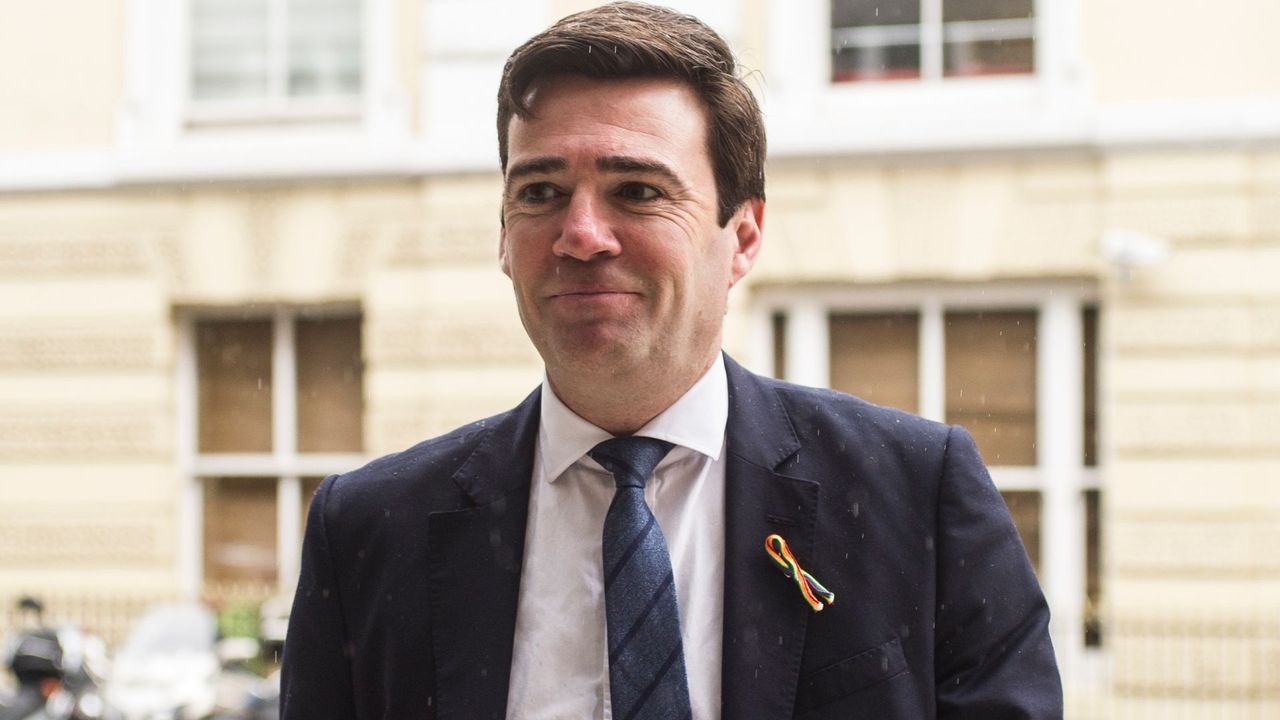
What UK intellectual property wants from the new prime minister
Note: This document is to be used in conjunction with the data download for patent, trade mark, design and hearing data for 2025 and provides further insight for these statistics....

The outlook for UK intellectual property policy remains uncertain after the country's new prime minister Andy Burnham took office this week and scrapped the ministry which had overseen the UK Intellectual Property Office. The UK government is expected to maintain its focus on boosting economic growth which has characterized some of the UKIPO’s recent activity.
The UPC Court of Appeal has confirmed that the Unified Patent Court can exercise jurisdiction over European patent applications, provided they are granted before the defendant files their statement of defence. This landmark decision means patent holders may now be locked into the UPC system even before their patents are officially granted, fundamentally changing the strategic timing considerations for opting out of UPC jurisdiction.
Chris McDonald MP appointed as Minister with responsibility for IP.
Our articles provide general guidance. For advice specific to your situation, contact our team for a consultation.
Request a Callback